SCAM ALERT: Be cautious of fraudulent calls or text messages claiming to be from the court. To verify any court communication, please call (505) 841-8151.
SCAM ALERT: Be cautious of fraudulent calls or text messages claiming to be from the court. To verify any court communication, please call (505) 841-8151.
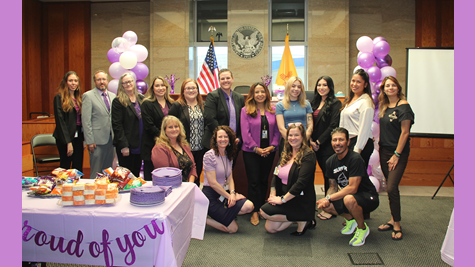
As a national leader in innovative and successful Treatment Courts, the Bernalillo County Metropolitan Court recognized National Recovery Month throughout September to promote evidence-based treatment and recovery practices.
To commemorate the dedicated month and to celebrate the progress of participants in its DWI Recovery Court, the Specialty Court held two celebrations. Program leaders, mentors, and graduates came together to celebrate the milestones achieved by so many on their journeys to recovery.
“Recovery is a journey that requires accountability, perseverance and support, and every milestone deserves to be recognized,” said DWI Recovery Court Presiding Judge Christine E. Rodriguez. “Our participants commit to a challenging, multi-year program that asks them to make meaningful changes in their lives. These celebrations give them an opportunity to pause, reflect on how far they have come, and recognize the people who have supported them along the way.”
Established in 1997, the DWI Recovery Court provides intensive court supervision, alcohol & drug screening, substance use counseling, and community-based self-help for high-risk defendants convicted of subsequent misdemeanor DWI offenses in the Metropolitan Court.
As one of the first DWI/Drug Courts in the country, the DWI Recovery Court has continued to evolve and incorporate best practices into the fabric of the program, which has produced more than 3,845 graduates.
With a graduation recidivism rate of 7.22% and guided by the ten key components of DWI Courts, the program strives to be inclusive and serves not only repeat DWI offenders suffering from substance abuse but also participants who have co-occurring disorders. The program also offers a Spanish language track and groups for individuals who identify as LGBTQ+.
The program aims to treat each participant as a whole, and in addition to counseling, various services such as Medication-Assisted Treatment (MAT) and peer support are offered. The Specialty Court provides case management services and assists participants with things such as medical insurance, rental assistance, and obtaining employment.
By clicking 'Continue' you will be redirected to

